Data Darbar Lahore
The resting place and grand mosque of Hazrat Ali Hujwiri (Data Ganj Bakhsh). Authoritative source for the complete bilingual Kashf al-Mahjub, 24/7 Langar Khana, ziyarat logistics, historical documentaries, and live operational updates.
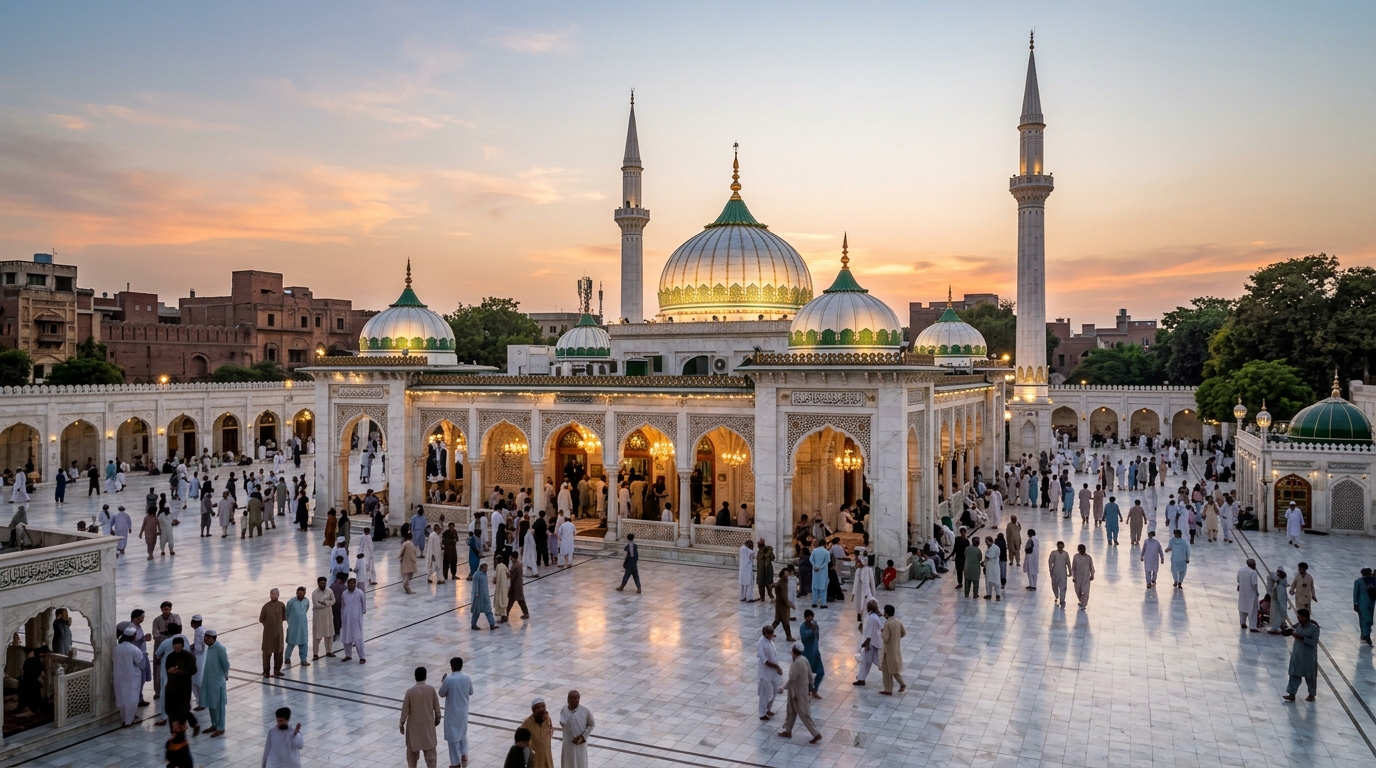
Kashf al-Mahjub (The Unveiling of the Veiled)
Composed in 11th-century Lahore by Hazrat Ali bin Usman Hujwiri (Data Ganj Bakhshؒ). The earliest Persian treatise on Islamic mysticism, featuring R. A. Nicholson’s 1911 translation, parallel Urdu summaries, and scholarly commentary.
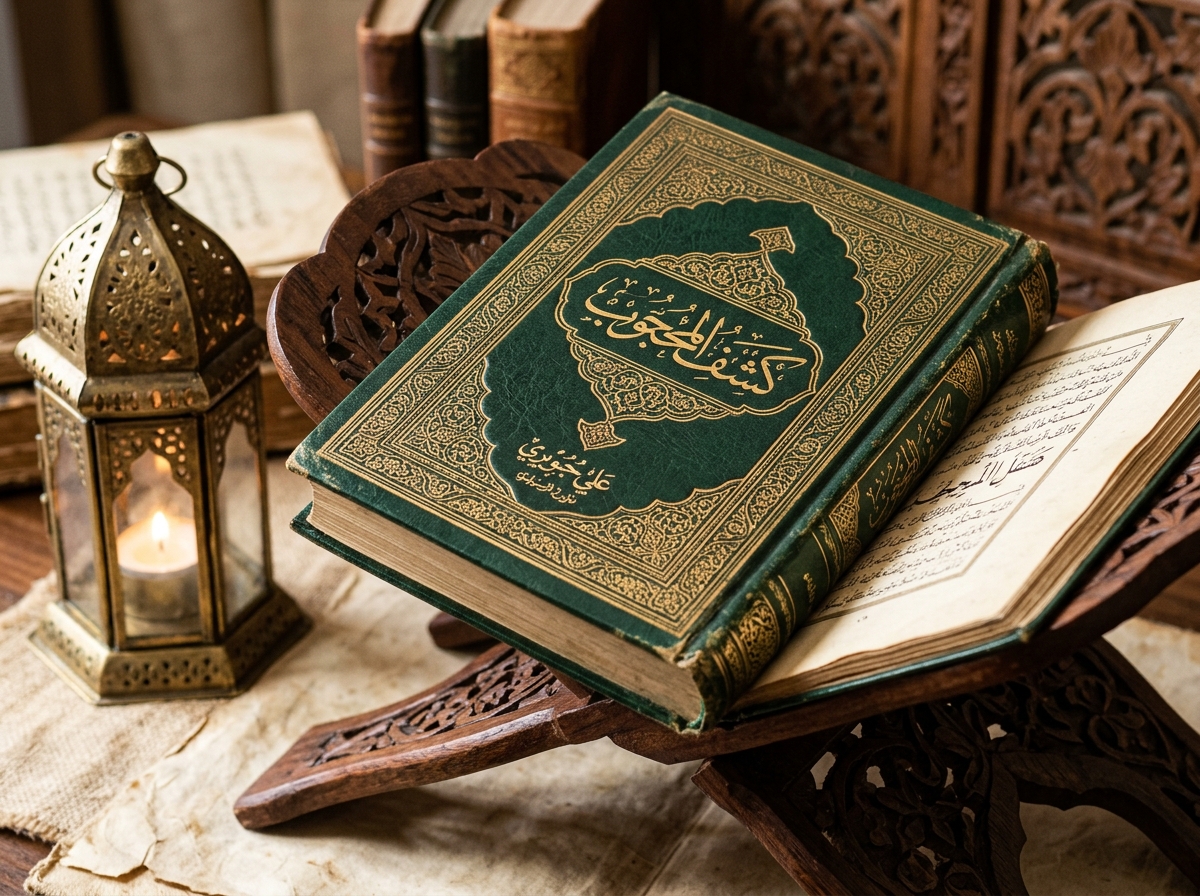
Kashf al-Mahjub (کشف المحجوب)
Authored by Hazrat Ali Hujwiri • Translated by R. A. Nicholson (1911)
On the Affirmation of Knowledge
The first chapter of Kashf al-Mahjub, "On the Affirmation of Knowledge", argues that knowledge and action are inseparable. Hazrat Ali Hujwiri teaches that seekers must learn what the religious law requires, reject useless learning, refute sceptics who deny knowledge, and recognise that perfect human knowledge ends in humility before God.
On Poverty
The second chapter of Kashf al-Mahjub, "On Poverty" (faqr), explains that spiritual poverty means emptying the heart of everything except God. Ali Hujwiri distinguishes its outward form, destitution, from its inner essence, free choice, and weighs Sufi debates on whether poverty or wealth is spiritually superior.
On Ṣúfiism
The third chapter of Kashf al-Mahjub, "On Ṣúfiism" (Tasawwuf), defines Sufism as moral purity, self-renunciation, and turning wholly to God. Ali Hujwiri distinguishes between the true Sufi, the earnest aspirant (mutasawwif), and the false pretender (mustaswif), detailing classical definitions from masters including Junayd, Dhu al-Nun, and Shibli.
On the Wearing of Patched Frocks (Muraqqaʿāt)
The fourth chapter of Kashf al-Mahjub, "On the Wearing of Patched Frocks" (Muraqqaʿāt), explains the spiritual rationale and strict etiquette of the dervish robe. Ali Hujwiri demonstrates that wearing patched wool is an established Sunnah of the Prophet Muhammad ﷺ and the Companions, warning against wearing it as a deceptive cloak of hypocrisy.
Langar Khana — 24/7 Free Community Kitchen
Feeding 50,000+ devotees daily with dignity, warmth, and complete equality. Operating round the clock for nearly 1,000 years in Lahore.
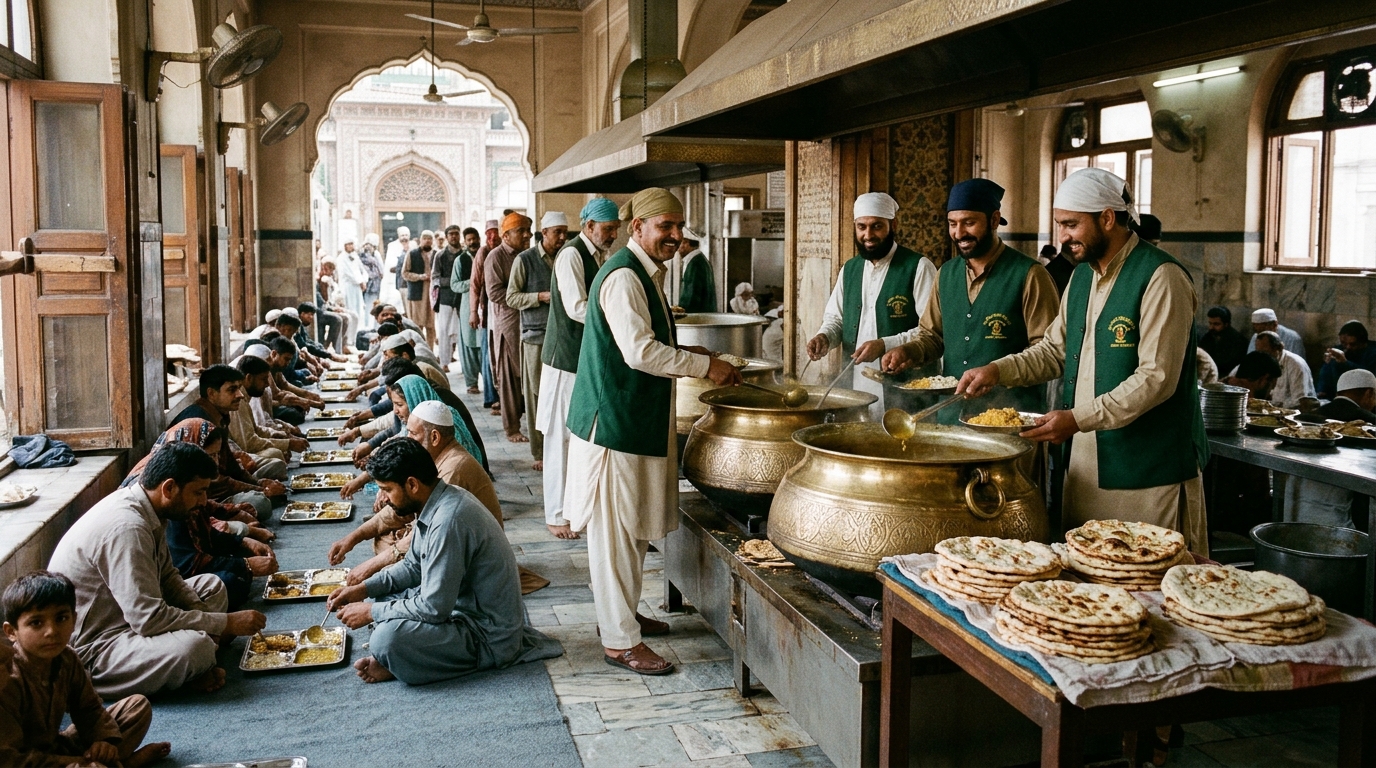
A 1,000-Year Sanctuary of Generosity
At Data Darbar, the hearth has never gone cold. Hot tandoori rotis, daal chawal, beef pulao, and seasonal sweet dishes are distributed day and night. Dedicated separate dining halls for men and women/families ensure complete comfort and privacy.
Data Darbar Ziyarat & Visiting Logistics
Plan your visit to the shrine outside Bhati Gate: numbered gates, token-based shoe counters, wuzu facilities, and Circular Road parking.
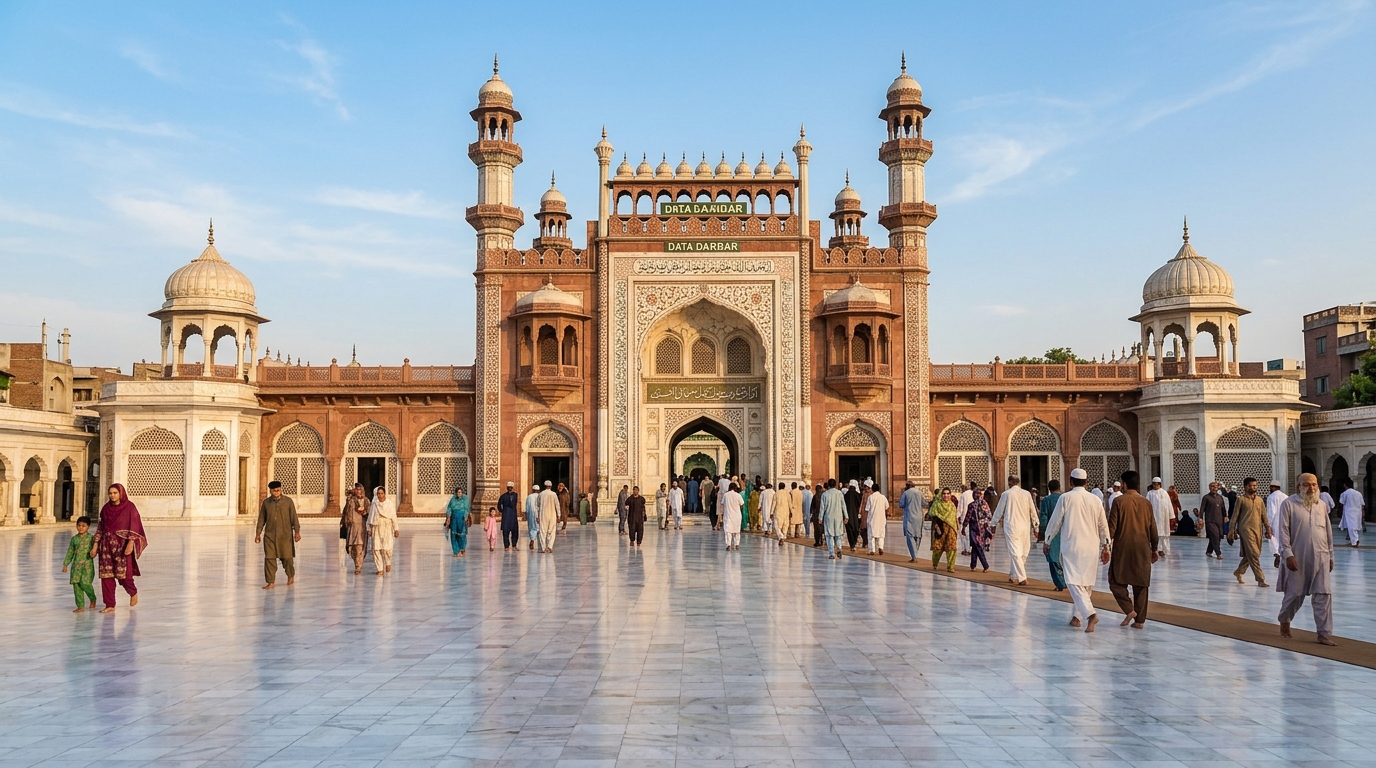
Visiting Etiquette & Entry Gates
Visitors pass security walk-through gates before depositing shoes at official token-based stands. The extensive white marble plaza leads directly to the mausoleum of Hazrat Ali Hujwiri and the expansive congregational prayer hall.
Qawwali & Media Vault
Authentic devotional renditions and manqabats dedicated to Data Ganj Bakhsh. Featuring verified label masters and archival recordings.
Historical Documentary & Heritage
Watch curated documentaries exploring the life of Hazrat Ali Hujwiri (Data Ganj Bakhsh), his journey from Ghazni to Lahore, and 1,000 years of shrine architecture.
Life, Legacy & Journey of Hazrat Ali Hujwiri
An authoritative cinematic exploration of Data Ganj Bakhsh’s life, his education across the Islamic world, arrival in 11th-century Ghaznavid Lahore, and authorship of Kashf al-Mahjub.
Common Questions about Data Darbar
Where is Data Darbar located?
Data Darbar is located outside Bhati Gate on the edge of the walled city of Lahore, Punjab, Pakistan, near Lower Mall and Circular Road.
Who is buried at Data Darbar?
The shrine contains the tomb of Hazrat Abul Hassan Ali bin Usman Hujwiri (Data Ganj Bakhsh), the eleventh-century Sufi scholar and author of Kashf al-Mahjub.
When is the Urs of Data Ganj Bakhsh?
The annual Urs is observed from 18 to 20 Safar in the Islamic (Hijri) calendar. The Gregorian dates shift each year and are confirmed by local moon sighting.
Is there an entry fee for Data Darbar?
No. Entry to the shrine is free for all visitors.